Project Cost Estimating Tools & Techniques
Project cost estimating scares a lot of people. They don't know how much something will cost, but they know whatever value they give, they will be held to it by their manager.

Module 7 of the PM PrepCast is all about Project Cost Management.
Consider this study program if you're preparing to take your CAPM or PMP Certification exam.
Disclosure: I may receive a commission if you purchase the PM PrepCast with this link.
The challenge with estimating is that it always involves some uncertainty. Some of the factors that contribute to this uncertainty include...
- Experience with Similar Projects: The less experience you have with similar projects, the greater the uncertainty. If you've managed similar projects, you will be able to better estimate the costs of the project.
- Planning Horizon: The longer the planning horizon, the greater the uncertainty. The planning horizon you are considering may be the whole project or just a certain phase. Either way, you will be able to better estimate costs for the time periods that are closer to the present.
- Project Duration: The longer the project, the greater the uncertainty. This is similar to planning horizon in the sense that if a project is of a shorter duration you are more likely to account for most of the costs.
- People: The quantity of people and their skill will be a huge factor in estimating their costs. Early in the project, you may not even know the specific people that will be on the project. That will increase the uncertainty of your cost estimates.
Fortunately, there are some tools and techniques used by professional project managers that you can use to develop more accurate cost estimates...
Expert Judgement
Expert judgment uses the experience and knowledge of experts to estimate the cost of the project. This technique can take into account unique factors specific to the project. However, it can also be biased.
Analogous Estimating
Analogous estimating uses historical data from similar projects as a basis for the cost estimate. The estimate can be adjusted for known differences between the projects. This type of estimate is usually used in the early phases of a project and is less accurate than other methods.
Parametric Estimating
Parametric estimating uses statistical modeling to develop a cost estimate. It uses historical data of key cost drivers to calculate an estimate for different parameters such as cost and duration. For example, square footage is used in some construction projects.
Bottom-Up Estimating
Bottom-up estimating uses the estimates of individual work packages which are then summarized or "rolled up" to determine an overall cost estimate for the project. This type of estimate is generally more accurate than other methods since it is looking at costs from a more granular perspective.
Three-Point Estimates
Three-point estimates originated with the Program Evaluation and Review Technique (PERT). This method uses three estimates to define an approximate range for an activities cost: Most Likely (Cm), Optimistic (Co), and Pessimistic (Cp). The cost estimate is calculated using a weighted average: Cost Estimate = (Co + 4Cm + Cp)/6
Reserve Analysis
Reserve analysis is used to determine how much contingency reserve, if any, should be allocated to the project. This funding is used to account for cost uncertainty.
Cost of Quality
Cost of Quality (COQ) includes money spent during the project to avoid failures and money spent during and after the project due to failures. During cost estimation, assumptions about the COQ can be included in the project cost estimate.
Project Management Estimating Software
Project management estimating software includes cost estimating software applications, spreadsheets, simulation applications, and statistical software tools. This type of software is especially useful for looking at cost estimation alternatives.
Vendor Bid Analysis
Vendor analysis can be used to estimate what the project should cost by comparing the bids submitted by multiple vendors.
Pass your PMP Exam!
The PM Exam Simulator is an online exam simulator.
Realistic exam sample questions so you can pass your CAPM or PMP Certification exam.
Disclosure: I may receive a commission if you purchase the PM Exam Simulator with this link.
Using some of these tools and techniques when you're planning your project can help with your project budgeting.
Author: Michael A. Martinez, PMP
Article Citation
Martinez, M.A. Project Cost Estimating Tools & Techniques.
Retrieved from https://www.project-management-skills.com/project-cost-estimating.html
Related Articles About Project Cost Estimating
Project cost management is one of the most important aspects of project management that you need to master. Learn about project cost estimating, budgeting and control.
Learn what project budgeting is, why it is important, and how to prepare a budget for your project.
Do You Want More Project Management Tips?
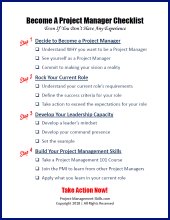
Subscribe to Project Success Tips, my FREE Project Management Newsletter where I share tips and techniques that you can use to get your Project Management Career off to a great start.
As a BONUS for signing up, you'll receive access to my Subscribers Only Download Page! This is where you can download my "Become A Project Manager Checklist" and other project management templates.
Don't wait...
New! Comments
Have your say about what you just read! Leave me a comment in the box below.